Preparing your learning space...
57% through Deployment & Cloud tutorials
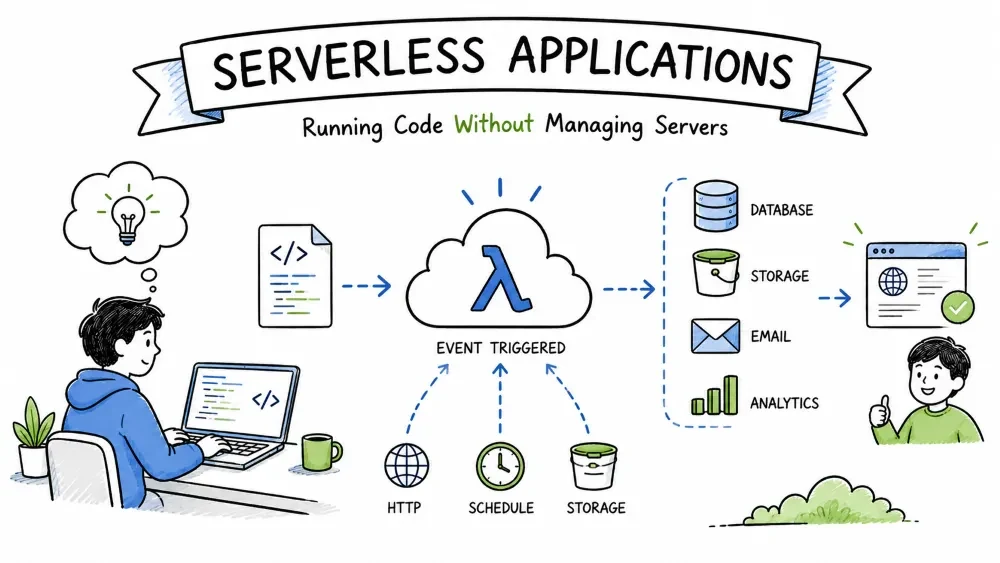
Serverless computing lets you run code without managing servers, automatically scaling with demand. It reduces operational overhead and costs for event-driven or short-lived tasks.
Serverless Applications execute functions in response to events, with the cloud provider handling infrastructure.
Why it is useful: It eliminates server management and scales automatically, making it ideal for APIs, callbacks, and batch jobs.
Example (AWS Lambda in Python):
# lambda_function.py
import json

def handler(event, context):
    return {
        "statusCode": 200,
        "body": json.dumps({"message": "Hello from serverless"})
    }
This function can be invoked via the AWS CLI:
aws lambda invoke --function-name MyFunction --payload '{"key":"value"}' response.json
The CLI call triggers the function and returns a JSON response. You are billed only for the milliseconds your code actually runs — there is no charge when nothing is executing.
Best Practices
Save your progress and earn XP for completing tutorials.
4 questions · Pass with 70%+
1Main benefit of serverless:
2AWS Lambda's max execution timeout is roughly:
3Where should serverless function state live?
4 Serverless is best for:
Technology
Forward Deployed Engineer
Lesson group
Deployment & Cloud
Progress
57% complete