Preparing your learning space...
43% through Deployment & Cloud tutorials
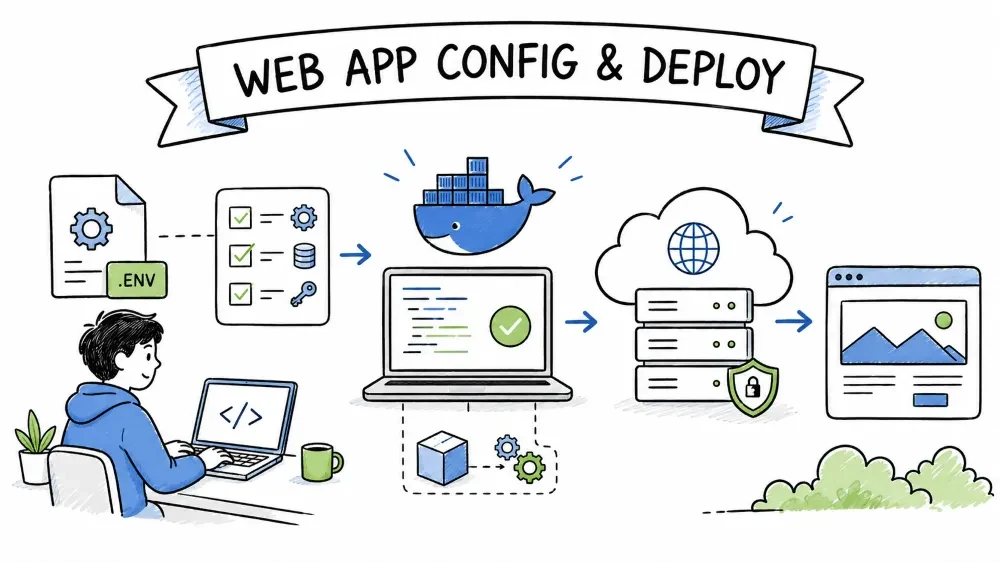
Configuration and deployment are critical for making web applications reliable and maintainable. Proper environment settings and clear deployment scripts reduce errors and speed up releases.
Environment Configuration deals with defining settings that vary between development, staging, and production.
Why it is useful: Correct configuration prevents runtime errors and ensures the app behaves as expected in each context.
Example:
# config.yaml
database:
  host: prod-db.example.com
  port: 5432
  username: app_user
  # Never store the password here — load it from an env var or secrets manager
  password: ${DB_PASSWORD}
logging:
  level: info
This YAML file provides production-ready database and logging settings. The password is read from an environment variable (${DB_PASSWORD}), so no secret ever lands in source control — load it from environment variables or a secrets manager instead of committing it.
Best Practices
Deploying Web Applications involves delivering the built application to a server or platform where users can access it.
Why it is useful: A well-defined deployment process minimizes downtime and simplifies rollbacks.
Example:
web: node app.js
The Procfile tells a platform (e.g., Heroku) how to start the web server, enabling a simple and repeatable deployment.
Save your progress and earn XP for completing tutorials.
4 questions · Pass with 70%+
1Best practice for config that differs per environment:
2A Procfile with web: node app.js tells the platform:
3What should you NOT do before deploying?
4Where should a production password live?
Technology
Forward Deployed Engineer
Lesson group
Deployment & Cloud
Progress
43% complete